





Read Full Transcript:
Mike Howell (00:08):
The Dirt with me, Mike Howell, an economics podcast where I present the down and dirty agronomic science to help grow crops and bottom lines. Inspired by economics.com, farming’s go-to informational resource, I’m here to break down the latest crop nutrition research, news, and issues, helping farmers make better business decisions through actionable insights. Let’s dig in.
(00:38):
Well, hello again, everyone. Welcome back to The Dirt. And we’re drawing to the close of season two. It’s hard to believe that we’ve got two seasons almost under our belt now. We really appreciate everybody tuning into these episodes and hope you’re getting some benefit from it.
(00:51):
I want to remind everyone, we haven’t mentioned this in a while, but we really appreciate your feedback. So if you don’t mind, give us a rating on your podcast channel there, and you can always go to nutrien-ekonomics, with a K, dot com. Give us some feedback on there as well. Anything you think we can do better or anything we can do as far as new episodes to help improve your experience, we’re always open to that kind information.
(01:14):
So today, we have Dr. Alan Blaylock. He’s a senior agronomist out in the Western part of the United States back with us again today. Alan’s no stranger to The Dirt. He’s been on several episodes this year. Alan, welcome back.
Dr. Alan Blaylock (01:26):
Thanks, Mike. Good to be back.
Mike Howell (01:27):
So Alan, today, I thought we would talk a little bit about potash. And we’ve talked a good bit about potash over the last two seasons, but there’s always more information that we can dive into a little deeper. And one of the main things that we have not talked about is the different sources of potash. And I know we have red potash and we have white potash. If you will, let’s start off and talk about a little bit of the difference between those two sources. What makes them different?
Dr. Alan Blaylock (01:51):
Well, first of all, Mike, let’s just talk about what the term potash means. And sometimes, potash is used in a very broad sense to describe virtually all potash fertilizers as a group. But more specifically, we use potash to describe a certain type of potassium fertilizer. That’s really potassium chloride. Another term for it is muriate of potash, the term muriate coming from the combination of potassium with chloride, and hydrochloric acid is called muriatic acid. When we talk about muriate of potash, we’re talking about potassium chloride, that chloride salt of potassium.
(02:28):
Specifically to your question, this difference between red and white potash really is just a difference in how the potash mineral is processed as it’s extracted from the earth. Most of the potash that we use is deep within the earth. And it’s a result of old inland oceans, as it were, that accumulated salts, and those have become buried under the earth with different geologic events. Most of that potash, we’re mining from deep within the earth, and there are a variety of potash minerals.
(03:00):
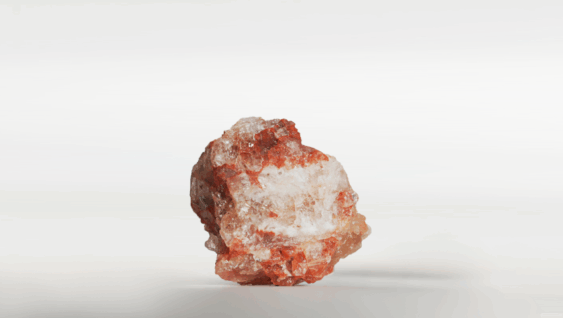
The most common one that we’re extracting is a combination of potassium chloride and sodium chloride. When we dig that out of the earth, we grind it up, we screen it, we separate the sodium chloride from the potassium chloride by a flotation process, and that potash usually is red in color. Now, that red color comes from trace amounts of iron and other minerals, and so those iron oxides give it a bit of a red or pink color. Now, some of those potash salts are white in color. And so when we mine that potash ore, it comes up as a mixture of white and red salts. Some of that white potash gets combined with the red. Now, when you buy white potash fertilizer, on the other hand, that’s been processed in a different way.
(03:43):
Again, the red potash is simply extracted, it’s ground and screened, sorted by size. Sometimes, we compact it to make specific products, compact it into a cake, and then grind it up again and screen it. But that potash carries those iron impurities with it and has that red color. The white potash that we talk about, on the other hand, is processed by dissolving those potash salts in water.
(04:06):
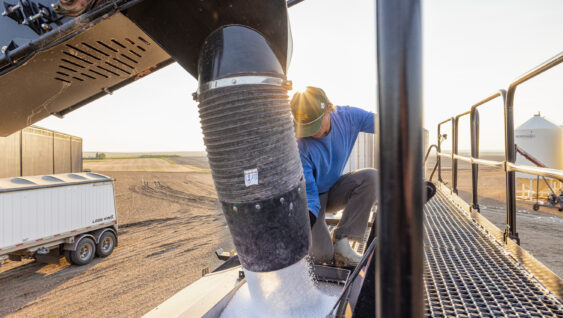
Now, there’s a process we call solution mining, which is done underground, where you can pump water down into the potash deposit deep underground and allow that potash to dissolve, pump those brines back to the surface where they’re then dried and purified. That process results in a white potash because those iron impurities are left behind. They’re not as soluble, and so they don’t come along with the potassium chloride.
(04:32):
The white potash tends to have a little bit higher analysis. It’s usually 62% potassium oxide, where the red potash is usually graded at 60%. So there’s a slight difference in the amount of actual potassium in those materials. Chemically, they’re the same. They behave the same. They’re both potassium chloride. We use them the same. And so they’re virtually interchangeable.
(04:54):
There’s one use for which the white potash might be preferred, and that’s if you were going to dissolve that potash to make some kind of solution. There, we would want the white potash, because some of those trace impurities are less soluble, so they might result in some precipitate in the solution. The red potash isn’t as good for making solutions.
(05:14):
But basically, in terms of our agronomic use, they’re virtually identical. We use them the same. They have the same result on the plant. They perform the same in the soil. The only difference being a small difference in the amount of actual potassium.
Mike Howell (05:27):
No reason anybody should get concerned if their supplier can only get them white potash or only get red potash. Agronomically, there’s not going to be any difference in the two.
Dr. Alan Blaylock (05:37):
That’s correct, Mike Agronomically, we just use them the same. You might have to adjust your blend calculator for the extra two percent potassium in white potash.
(05:45):
Now, I should also note that one of the other potassium fertilizers that is sometimes referred to as potash is potassium sulfate. That’s in that larger definition of potash that’s really just including everything. Potassium sulfate is also white, but it’s a different mineral. It’s potassium sulfate rather than potassium chloride. And there are times we want to use that for certain crops, and particularly if it’s economically feasible. It tends to come at a little higher price, but that varies according to market conditions. We don’t want to confuse white potassium chloride with white potassium sulfate, because they might be used differently in different circumstances.
Mike Howell (06:24):
Okay, Alan. Well, that sure sheds a lot of light on that, something that I really wasn’t all that familiar with until we started talking about doing the podcast on this. Let everybody understand what the difference in those two products are.
(06:34):
So Alan, it’s fall here in the United States. Harvest is complete or nearly complete in most areas, and there’s a lot of fall tillage going on. People are doing fall applications of fertilizers and that type stuff. Let’s talk a little bit about fall application of potash. Is this an acceptable practice? And if so, is it acceptable everywhere or only in certain places?
Dr. Alan Blaylock (06:58):
Mike, in most cases, fall application of potash is certainly acceptable. There would be, as I say, in most cases, no reason not to put it on in the fall. It’s convenient time to put it on when soil conditions tend to be drier. We want to get as much done in the fall as we can. So that fall application is perfectly suitable.
(07:16):
There are some exceptions where we might not want to apply potash in the fall, and this would be especially sandy soils in humid regions where we can have leaching. Usually, we don’t consider potassium to be a leachable nutrient, but keeping in mind that it’s a positive ion, which we call a cation, that can be held on the soil’s cation exchange complex, the negatively charged sites in the soil. If we have a low cation exchange capacity, say a very sandy soil, soils low in organic matter, and we don’t have the capacity to hold those cations against leaching, then certainly we could lose potash by leaching. And in those cases, in a humid region where we get over winter rainfall, fall application of potash would not work as well, because we have the potential for loss.
(08:05):
Some examples of that, think about the sands of Florida where we have almost no cation exchange and we’re growing crops that need a lot of potassium, and the coastal plains of the southeastern US where we have very sandy soils and we’re growing corn and cotton and other crops that need a lot of potassium. Fall application would not be the preferred time to apply. We want to hold that off until the spring.
(08:26):
And in some cases, we might even want to split apply potassium. For example, some years ago I spent some time with some potato growers in Florida, talking about how they actually need to apply potassium three or four times during the growing season on those potatoes, because they just have no cation exchange, they’re irrigating, and potatoes need a really strong supply of potassium all the way through their growing season.
(08:48):
So there are exceptions to the comments about fall application. But in most cases, particularly in the corn belt, most of our soils are suitable for fall application. That’s a good time to make that application according to your soil test and buildup soil K levels.
Mike Howell (09:03):
Alan, I appreciate you talking about the deep sands we have here, and we’ve talked about that several times on the previous episodes and how we can actually lose some of this potash during the winter months. And today, I think growers are understanding that and more and more are trying to get these potassium applications put out closer to planning time if it’s possible.
(09:21):
We also want to recognize that there’s some limitations to doing that. The weather conditions in the spring aren’t always as favorable as they are for a fall application. You have to look at labor and equipment and factor all of that in making these determinations. But strictly agronomically speaking, when we get in these deep sands, the closer to planning we can make these applications, the better it’s going to be.
(09:41):
Alan, are there any other concerns about putting out potash in the fall?
Dr. Alan Blaylock (09:45):
Well, there’s one concern that growers don’t usually hear about it, and I think it’s, for the most part, it’s really a lesser concern. But there are certain types of soil clays that can fix potash. In other words, the potash, the potassium ions get trapped within those clay layers and it becomes quite unavailable. Now, eventually those clays will weather and that potassium might be released. But we call that potassium fixation. And in certain soils with those ill light type of clays, the potassium might get tied up. And the longer it sits there in the soil, the greater the potential for that to occur. I think that’s a lesser concern for the growers in the end, because you probably don’t even know what types of clay you have.
(10:25):
And so again, the key is to follow your soil test, apply what is needed. If it’s suitable to apply it in the fall, you’re not one of these exceptional situations where you should not be applying it in the fall, generally that works pretty well. And most growers won’t know what to do with that information anyway. But it is one of the concerns that scientists have studied. You have to know a lot more about your soil than probably most practitioners are going to know.
Mike Howell (10:50):
Well, Alan, what about incorporation? I know some sources of fertilizer, we need to make sure we get them incorporated. What about potash? Is that one that we need to incorporate, or can we leave it laying on top of the surface?
Dr. Alan Blaylock (11:00):
Well, personally, Mike, I would prefer it to be incorporated. Now, obviously, we have a lot of situations. We have a lot of people growing no-till crops. And so that fertilizer is going to be left on the surface.
(11:11):
So if we think about nutrient placement on the soil surface, what’s our big risk? Well, for something like potash, it’s a soluble salt. If we put it on the surface, the soil freezes and we get melting snow or we get rainfall events that cause that soluble salt to dissolve and start to move off with water runoff, then that would be an undesirable thing. I don’t know what you do about that in a no-till situation, but it is a potential loss from surface applied potash.
(11:40):
If there is the opportunity to get it incorporated, it’s probably best. But for a lot of these guys, there isn’t that opportunity. If we’re doing true no-till, the only option is to put it on the surface.
(11:51):
The other downside of leaving it on the surface, another risk is that we end up with what we call stratification, where we get potash accumulating in the surface soil, the roots are extracting potash from deeper in the soil, residue gets deposited at the surface. So we tend to get higher concentrations in the surface few inches of soil while we’re depleting the subsoil. Basically, we’re restricting the amount of roots that have access to our potash, particularly in dry conditions.
(12:18):
We talked in a previous episode about regenerative agriculture and the benefits of reducing soil disturbance and reducing or eliminating tillage. This is one of those, shall we say, unintended consequences of eliminating tillage, is the possibility for nutrient stratification, the possibility for more nutrient runoff. We need to be concerned about that. And maintaining good residue cover is important, but with a soluble nutrient, we still have the risk of runoff. So that’s the downside of leaving it on the surface.
(12:46):
Generally, potash applied on the surface, for most purposes, we would say that would be an acceptable practice. But understand the risk of potential nutrient runoff. And there’s really not much we can do about that in a no-till situation with these soluble nutrients.
Mike Howell (13:04):
Alan, another thing that we are more and more concerned about here in my part of the world, especially in the last 15 or 20 years, we’ve developed resistance to a lot of our herbicides for some very key weeds, and one of the practices that have changed is putting out a residual herbicide in the fall to prevent those weeds from coming up. Italian rye grass is one that comes to mind. If we don’t get on top of that in the fall, we’re not going to be able to control that in the spring.
(13:29):
But another issue that is we’re not able to incorporate that fertilizer if we don’t get it put out before we make these applications. So that’s something that may change our timing a little bit. We need to get these herbicide applications made before the rains start and it gets too wet to get in there. And we can’t disturb that soil after we make those applications or we’ll be breaking that barrier and the weeds will still emerge on us that way. Got a lot of moving parts here that we have to take into account before we make these applications.
Dr. Alan Blaylock (13:55):
Yeah. Mike, we need to consider how these nutrient applications fit with other operations. One thing about potash on the positive side is we don’t necessarily worry about the timing of that fall application, where nitrogen, we want to be really careful. If we’re applying nitrogen in the fall, it needs to go on late when the soil is cold to slow or prevent the conversion of ammonium fertilizers to nitrate, which can be lost. With potash, we’re not worried about that transformation. So we can apply it regardless of soil temperature. So that’s a good thing.
(14:26):
The other thing to remember is that potassium is a cation in the soil solution. And so if we get a little moisture on that, get it moved into the soil a little bit, get it adhered or adsorbed to the cation exchange complex of that surface soil, that’s certainly to our advantage. Getting on before those rains is probably not a bad thing and can help us in that potash retention.
(14:48):
And also keeping in mind that potash, while we consider it an immobile nutrient in the soil, because it is held on the exchange sites, it’s a bit more mobile than phosphate. So we’ll move into the soil an inch or two, get down into that surface soil. So that’s a good thing.
Mike Howell (15:05):
So Alan, we’ve covered a bunch of topics today about potash. We’re wrapping up this season really quickly, but is there anything you want to leave our listeners with as we wrap up season two? Anything we may not have touched on or need to go a little deeper on?
Dr. Alan Blaylock (15:18):
Well, one thing I would like to mention, and we’ve probably talked about this in previous podcasts, but potassium is a really important element. We need adequate potassium to get maximum nitrogen use efficiency. Those two are interrelated. If we don’t have enough potash, the plant’s not going to utilize potassium adequately. We need potassium for good stress tolerance, whether it’s moisture,= stress or disease tolerance. Potash has been shown to play a role in a variety of plant stresses. It’s critical to plant water relationships and that transpiration of water. And it’s just such a critical nutrient.
(15:54):
And one of the things I see as I travel around the country and we look at soil test levels of potassium, we still have declining potassium in some of our key productive areas where we’re growing high yielding crops, we’re extracting potassium. And we’re not keeping up in some cases with crop removal of potassium.
(16:13):
This is something growers want to pay attention to. Pay attention to your soil tests and make sure you’re keeping up with that, especially if you’re growing crops where you’re removing the entire crop, like a forage crop or silage corn, these kinds of crops. With a grain crop, a lot of the potassium stays behind in the residue. We don’t remove as much. But when we’re removing the entire above ground plant, we remove a lot of potassium. A high yielding crop of alfalfa can remove several hundred tons of potassium a year. So that soil could become depleted very quickly if we’re harvesting forage crops, grasses, and legumes or, like I said, silage corn. So any kind of crop like that, we really want to be watching our potassium levels.
(16:54):
And it’s caused me a fair bit of concern that growers are, in a lot of areas, not applying as much pot as they really need to to maintain high yield. So really want to call growers’ attention to their soil test levels and particularly look back over recent years and compare current to past years and see if you’re trending downward or if you’re maintaining or even trending upward. Potassium is something we can build in that soil bank, and that building that soil to optimum levels can have long-term advantages. Just really want to call growers’ attention to that soil test and the trends, particularly over the last five to 10 years in their soil potassium to make sure they’re maintaining that, because it is so critical to high-yielding crops.
Mike Howell (17:38):
Alan, that’s a great point you brought out, and it reminds me of a situation that I saw down in South Mississippi. It’s probably been 15 or 20 years ago when I first noticed this. But we grow a lot of cotton and peanut rotation, and several guys are also growing a winter crop of rye grass for livestock feed in that as well. And we typically didn’t put a lot of emphasis on fertilization for our peanuts. They were able to scavenge the nutrients they needed, and we really just didn’t make a fertilizer application.
(18:04):
But we started running into these deficiencies in the cotton crop. And when we got to investigating, the guys were harvesting the peanuts for the nuts, but then they also, a lot of them would bail the hay off of that. So that’s removing even more nutrients. And then you put the rye grass out and the cattle are removing that grass and are even cutting it for hay in some cases. You’re removing a lot more nutrients than you’re able to put back, and it was showing up in our cotton crop in subsequent years. We just weren’t able to get enough potash put back out there to meet the needs of that crop, especially during peak bowl field times. So a great point you brought out there.
(18:39):
Listeners, we really appreciate you tuning in today. As you know, now’s time when we move into our famous person in agriculture section.
(18:49):
Today, I thought we would talk about Mary Pennington. She was a pioneer in the safe preservation and handling and storage of perishable foods. She entered the University of Pennsylvania in 1890 and completed the requirements for a BS degree in chemistry with minors in botany and zoology in 1892. However, at the time, the University of Pennsylvania did not grant degrees to women. She was given a certificate of proficiency instead of a degree.
(19:16):
Later, she had a position with the Philadelphia Bureau of Health, and she was instrumental in improving sanitation standards for the handling of milk and milk products. In 1907, she accepted a position as the Chief of the newly created Food Research Laboratory, which had been established to enforce the Pure Food and Drug Act of 1906. One of her major accomplishments was the development of standards of the safe processing of chickens raised for human consumption.
(19:43):
She also served as head of an investigation for refrigerated box car design and served on Herbert Hoover’s War Food Administration during World War I. Her involvement with refrigerated box car design at the Food Research Lab led to an interest in the entire process of transporting and storing perishable food, including both refrigerated transport and home refrigeration. She founded the Household Refrigeration Bureau in 1923 to educate consumers in the safe practices of domestic refrigeration.
(20:15):
During her career, Ms. Pennington won many awards, one of which was the Garvan-Olin Medal, the highest award given to women in the American Chemical Society. She’s also an inductee of both the National Women’s Hall of Fame and the American Society of Heating, Refrigerating, and Air Conditioning Engineers Hall of Fame. She was the first woman elected to the Poultry Historical Society Hall of Fame in 1959. And in 2018, she was inducted into the National Inventors Hall of Fame.
(20:44):
We want to thank Mary Pennington for her work in the area of food preservation and refrigeration and all that means for us to have a safe, healthy supply of food.
(20:53):
Listeners, we appreciate you tuning in to this episode. If you have any questions, feel free to check out our website. That’s nutrien-ekonomics, with a K, dot com. And until next time, this has been Mike Howell with The Dirt.