



New Insights For 4R Nutrient Stewardship From Fertilizer Canada
Summary of what you'll find
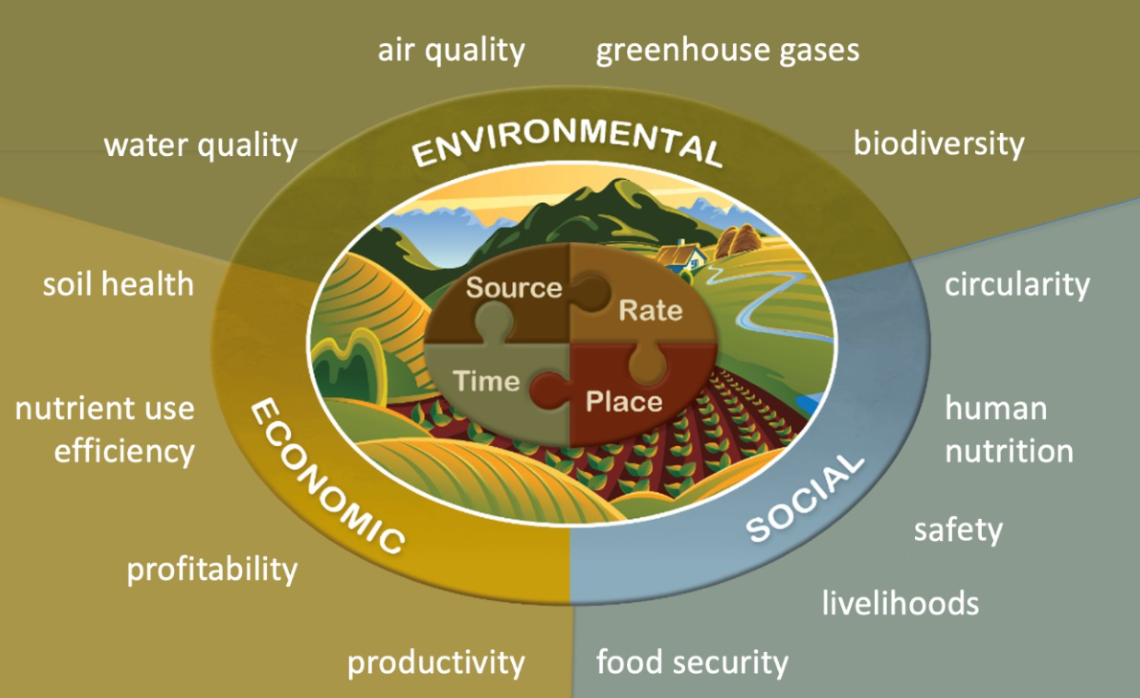
Applying the principles of 4R Nutrient Stewardship seems straightforward in theory: apply the right source, at the right rate, at the right time, and in the right place. But in practice, those decisions become more complex across different crops, soils, climates, and production systems, especially as new technologies continue to emerge.
That’s why Fertilizer Canada updated its 4R Practice Guidance, its first major revision since 2019. The new guidance incorporates the latest 4R nutrient stewardship research, emerging technologies, and expanded recommendations to help Canadian agronomists, retailers, crop advisors, and growers develop region-specific nutrient management plans. And for the very first time, it includes recommendations across all four major fertilizer nutrients as well as the use of manure as a crop nutrient source.
Why the 4R practice guidance updates matter
There are no one-size-fits-all approaches to nutrient management. Every farmer, field, and crop has unique nutrient requirements influenced by soil conditions, climate, and yield goals. The updated guidance reflects that reality by expanding recommendations for nitrogen, phosphorus, potassium, and sulphur while providing additional recommendations for different crops and climates, helping advisors and growers tailor 4R plans to individual fields.
Let’s explore what’s new throughout the updated guidance.
4R guidance now covers all four major fertilizer nutrients
A significant addition to the guidance is best management practices (BMPs) for potassium and sulphur fertilizer management. Previous editions of the 4R Practice Guidance focused solely on nitrogen and phosphorus, but the updated guidance expands to cover the four nutrients most commonly applied in Canadian cropping systems. Expanding the framework helps growers optimize the efficiency of their entire NPKS fertility program, rather than focusing only on nitrogen and phosphorus.
While potassium and sulphur don’t carry the same environmental risk as nitrogen and phosphorus, they must be carefully managed to maximize crop uptake, improve fertilizer efficiency, and support the efficient use of nitrogen and phosphorus. The updated guidance applies the 4R framework to both nutrients, outlining key considerations and BMPs across basic, intermediate, and advanced management systems.
For potassium, recommendations address all four 4R principles with practices progressing from basic approaches to advanced practices. For sulphur, the guidance distinguishes between elemental sulphur, thiosulphate, and sulphate sources, recognizing that each behaves differently in the soil. For example, elemental sulphur must first convert into plant-available sulphate, making it better suited for applications made well ahead of crop demand.
4R guidance now identifies practices that don’t align with 4R principles
The updated guidance now identifies nitrogen and phosphorus fertilizer management practices that do not align with the principles of 4R Nutrient Stewardship. This gives growers and advisors another tool to evaluate existing fertility programs and practices to help enhance nutrient efficiency and fertilizer management.
The new section outlines a variety of practices that annual small grain, oilseed, pulse, soybean, and corn growers should move away from whenever possible in both dry and humid growing climates. For example, in the Prairie region, the guidance recommends avoiding fall broadcast applications of unprotected nitrogen fertilizer or applications of nitrogen fertilizer on frozen or snow-covered soil.
By identifying practices that do not align with the 4R framework, the guidance helps growers evaluate current fertility programs and practices to help improve nutrient use efficiency and reduce the risk of nutrient loss. It also helps retailers, advisors, and agronomists provide stronger recommendations around the right rate, time, place, or source.
4R guidance now includes more tailored recommendations
Nutrient management recommendations aren’t universal, and the updated guidance reflects that. Building on the previous framework, the updated guidance provides more targeted recommendations by crop and climate.
The guidance separates 4R recommendations for annual crops in dry and humid regions to better reflect how climate and soil moisture influence nutrient use efficiency, nutrient loss, and overall nutrient management.
The update also includes dedicated sections for annual legumes, including soybeans, dry beans, and pulses, as well as intensive potato production in both rainfed and irrigated systems. These additions recognize that nutrient management decisions vary by crop and production system and help provide more targeted recommendations for developing field-specific 4R plans.
In addition to adding new BMPs for potassium and sulphur, the guidance also includes 4R recommendations for managing manure in annual crop rotations, helping growers better account for manure as a nutrient source while improving nutrient use efficiency.
By accounting for climate, cropping system, and nutrient source, the updated guidance provides a more practical framework for tailoring 4R plans to the unique conditions of a grower’s fields.
Dig into the new guidance from Fertilizer Canada
As nutrient management continues to evolve, so do the best management practices that support the 4Rs of nutrient stewardship. The updated 4R Practice Guidance reflects that evolution, adding potassium and sulphur recommendations, introducing more specific guidance for various climates and crops, and identifying practices that don’t align with the 4Rs.
More importantly, it gives agronomists, crop advisors, and growers a more complete framework for making fertility decisions. By applying the 4Rs across all four major fertilizer nutrients and tailoring recommendations to fields, the updated guidance can help improve nutrient use efficiency and maximize the value of every fertilizer dollar invested.
See detailed recommendations for specific crops, nutrients, and production systems in the full document from Fertilizer Canada.
Learn more about the importance of the 4Rs:
Investing In Sustainability And Profitability With The 4Rs
The Importance Of The 4Rs: Asking The Next Question
4R’s: For the Environment and For Profitability
The 4R Nutrient Stewardship logo is an official trademark of Fertilizer Canada. Used with permission.