



How Ammonium Sulfate Delivers Plant Available Sulfur
Summary of what you'll find
When you purchase fertilizer for this year’s crop, you want the fertilizer nutrients to be predictably available to this year’s crop. This helps your current crop achieve its best potential yield and gives you greater confidence that the rate applied will supply enough plant-available sulfur to meet crop demand. This is important for every fertilizer decision, but it’s particularly important when choosing your source of sulfur.
Choosing the right sulfur source helps ensure crops can access the nutrient when they need it throughout the growing season. Because plants take up sulfur as sulfate, the form applied affects how quickly it becomes available. Sulfate fertilizers have what crops require immediately, while elemental sulfur must be converted to sulfate over time.
While both elemental and sulfate sulfur sources can fit within fertility programs, sulfate fertilizers such as ammonium sulfate are better suited when current-season availability is a priority because they supply sulfur in its plant-available form.
What is ammonium sulfate fertilizer, and how is it readily available?
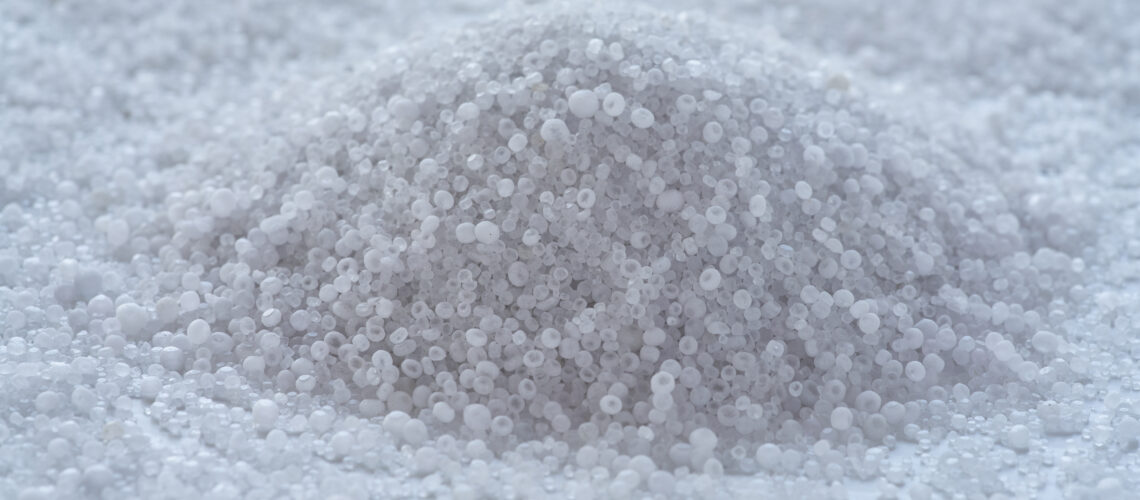
Ammonium sulfate (AMS) is a water-soluble fertilizer that typically contains 21 percent nitrogen in the ammonium form and 24 percent sulfur in the sulfate form. Once the granule dissolves, sulfate is immediately available for plant root uptake.
This makes ammonium sulfate well suited to fertility programs that need sulfur available for the current growing season. It can be broadcast or banded and applied in the spring or fall where conditions are appropriate. It can also be topdressed when sulfur deficiencies are identified early in the growing season.
The nitrogen in ammonium sulfate is also immediately available to support plant growth and should be accounted for in nitrogen budgets and considered when evaluating the fertilizer’s overall value.
What’s the difference between ammonium sulfate and elemental sulfur?
Elemental sulfur is another fertilizer option, but it does not supply sulfur in a plant-available form immediately after application.
Soil microorganisms must first oxidize elemental sulfur to convert it to sulfate, a process that can take weeks to years depending on soil conditions. The soil must be warm and moist to support active microbial growth, and the elemental sulfur prill must first be physically broken into microbial sized particles for the formation of sulfates. As a result, elemental sulfur may not become available quickly enough to address in-season sulfur deficiencies or immediate crop needs.¹ In cold climates, the rate of oxidation can be difficult to predict and often is less than 10 percent per year for conventional elemental sulfur products. Even after several years of application, the supply of sulfur from elemental sources is unpredictable, especially in colder farming regions.
Applying elemental sulfur well ahead of crop demand provides more time for oxidation but even fall applications may not produce enough sulfate to meet early-season needs in spring.² A spring application provides even less time to ensure oxidation before crops need to access the nutrient.
Unlike elemental sulfur, ammonium sulfate does not need to oxidize before crops can access its sulfur, which makes it a practical option when growers need plant-available sulfur before planting or during the growing season, or when flexible application timing is needed in unpredictable seasons.
Choosing your sulfur source
Each source has a role to play in nutrient management programs. Take a closer look at when crops need sulfur and which source provides the application flexibility your operation needs. The 4R framework can also help you evaluate the source that fits your fields.
When current season availability is a priority, ammonium sulfate can help deliver plant-available sulfur to meet crop demand. It can be broadcast, banded, or topdressed before planting or in-season, depending on your needs. For the sake of your crop and for your fertilizer budget – why wait? Use sulfate.
Learn more about sulfur fertilization and management in the following eKonomics resources:
Episode 20: Smarter Sulfur Management
Episode 24: Managing Sulfur: Timing, Sources and Tools
Sources:
¹University of Minnesota Extension. 2024. Fall Sulfur Applications: Selecting the Best Product.
²Canola Council of Canada. 2015. Sulfur Forms: Which to Use and When?